How to make an AI voiceover for a video (step by step)
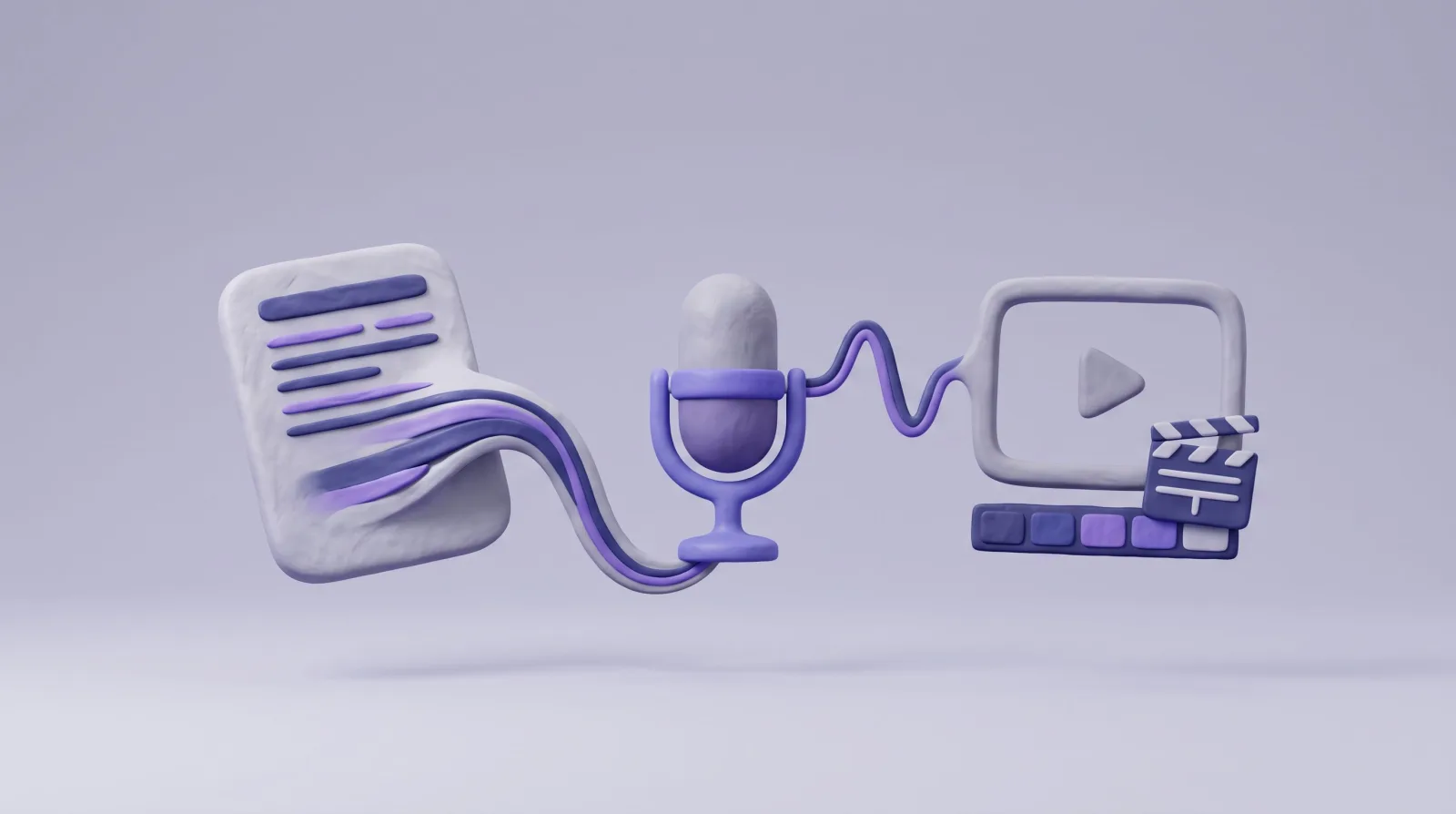
You’ve got the footage and a script, but not a microphone you trust - or a voice you want on camera. An AI voiceover solves it: paste the script, pick a voice, download an MP3, and line it up with your cuts. Here’s the whole workflow, start to finish, in about five minutes.
What you’ll need
- Your script (or the lines you want narrated).
- A free Speecho account - voice generation is account-only so your clips and credits are saved to you.
- Your usual video editor (Premiere, DaVinci Resolve, Final Cut, CapCut - anything that imports MP3).
Step 1 - Open the Voice tab and paste your script
In the app, switch to the Text to speech tab and paste your narration into the text box. You can do up to 20,000 characters at once - roughly 20 minutes of speech - so most single videos fit in one go. For a longer piece, split it into scene-sized chunks; you’ll place them separately on the timeline anyway.
Step 2 - Pick a quality tier
You’ll see three tiers. Match it to the video:
- Standard (OpenAI) - clean and natural, cheapest, 50+ languages. Great for tutorials and drafts.
- Enhanced (ElevenLabs Flash) - more lifelike and expressive. The right default for most published videos.
- Premium (ElevenLabs Multilingual v2) - the most natural, for flagship uploads.
Text in German, Spanish, French, Japanese or another of twenty-two languages? The Enhanced and Premium tiers have native speakers for it - see the German, Spanish, French and Japanese voice pages.
Not sure? Start with Enhanced. (There’s a fuller breakdown in ElevenLabs vs OpenAI: which voice do you need?.)
Step 3 - Choose a voice and preview it free
Pick a voice whose tone fits your channel, and hit preview. This is free - you can audition every voice in your language before spending a single credit, so try a couple and trust your ears.
Step 4 - Generate and download the MP3
Happy with the preview? Generate the clip. In a few seconds you’ll get a player where you can check the result, adjust playback speed, and download a standard MP3. That file is yours to re-download anytime.
Step 5 - Drop it on your timeline
Import the MP3 into your editor and lay it under your footage. Because you’re placing it yourself - not relying on automatic sync - you keep full control: nudge lines to hit your cuts, add a beat of silence before a reveal, duck it under music. That manual control is exactly what you want when editing to a script.
Getting clean, well-paced narration
A few habits make AI narration sound intentional rather than rushed:
- Punctuate for breath. Commas and full stops become pauses. Short sentences read better aloud than long ones - write for the ear.
- Spell tricky words phonetically if a name or acronym comes out wrong (“Speecho” as “Speecho”, “SQL” as “sequel”).
- Break long paragraphs into separate clips per scene. It’s easier to place, and easier to re-do one line without re-rendering everything.
- Match energy to content. Enhanced or Premium for anything with personality; Standard is fine for straight, factual narration.
Bonus: the same voiceover in another language
Want a second-language version of the video? Paste a translated script and generate the voiceover with a matching voice - you’ll get a clean MP3 in that language to drop onto a duplicate of your timeline. If your video started as a recording, you can even transcribe it and translate the transcript inside Speecho first, then voice the translation.
One honest caveat: this gives you narration in another language, not automatic dubbing - there’s no lip-sync or automatic timing to the original speaker. For voiceover-style videos (explainers, faceless channels, product demos) that’s exactly what you need; for a talking-head you’ll re-time the lines by hand.
What it costs
Per-character pricing means a voiceover is cheap. A three-minute explainer is roughly 3,000 characters - about 30 cents on Standard or 60 cents on Enhanced. Top up from $5, and since credits never expire, buying a little extra is never wasted. See the full pricing breakdown.
Ready to give your next video a voice? Open the Voice tab, paste your script, and preview a voice free.