Handwritten notes to text: how to photograph a page so the AI can read it
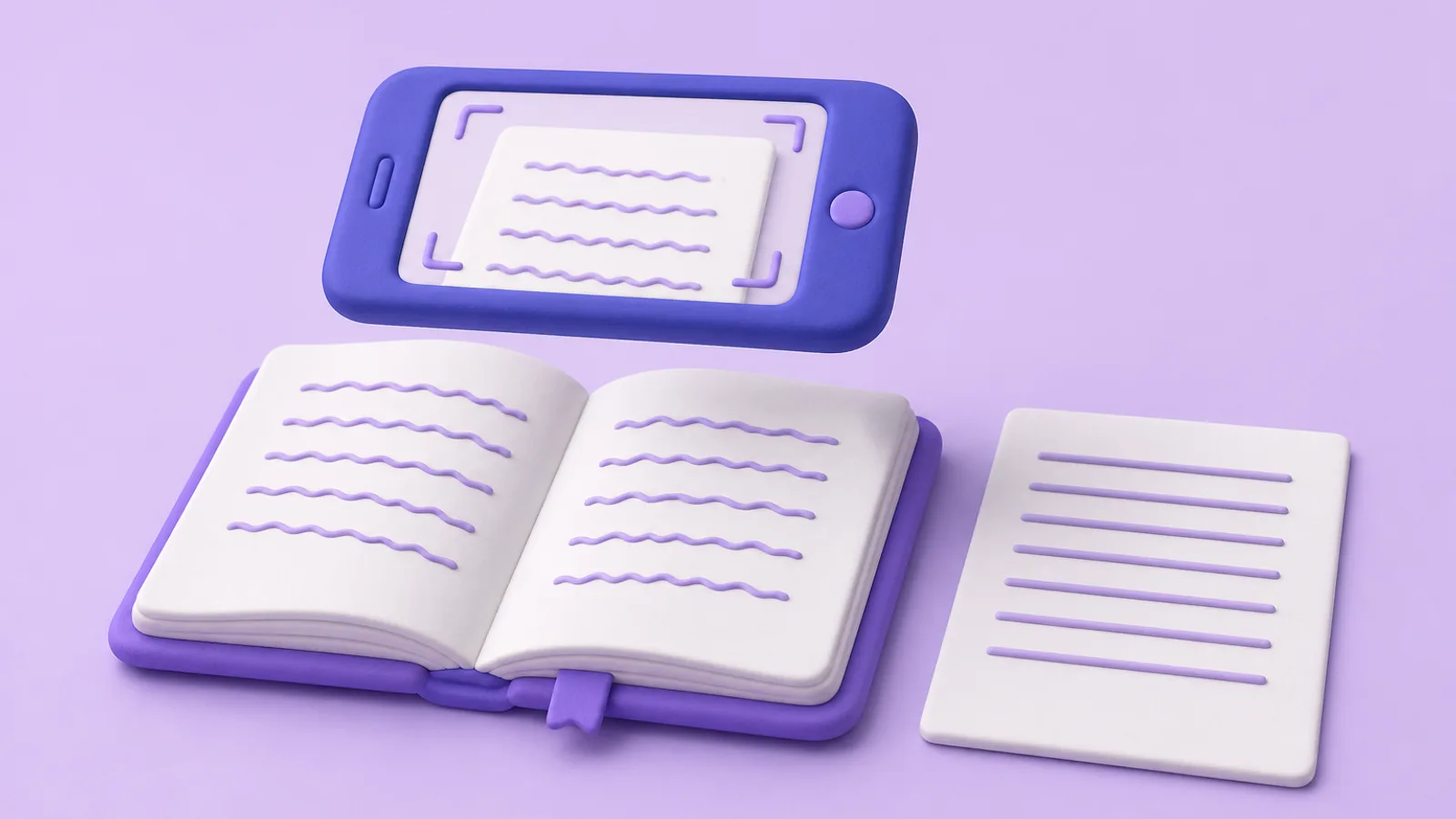
Retyping a handwritten page takes around fifteen minutes. An AI reads the same page in a few seconds, cursive included, and today’s vision models are good enough that the handwriting is rarely the problem. The photo is. A page shot at an angle, in yellow kitchen light, with the phone’s shadow across the bottom third, comes back full of gaps whatever reads it. Here is how to take a photo that works, what still goes wrong, and how to check the result.
Taking the photo: six rules
- One page per photo. A two-page spread doubles the chance of a curled edge and halves the resolution each page gets. Photograph every page separately.
- Straight down, page flat. Hold the phone parallel to the page, not at an angle. Slanted lines at the far edge are where most misreadings start. A notebook that won’t lie flat can be held open with two fingers outside the text.
- Even light, no flash. Daylight from a window is ideal. The flash leaves a white glare spot right over the words, and a lamp directly above you puts the phone’s shadow on the page.
- Fill the frame. Get close enough that the page almost touches the edges of the picture. The desk around the page is wasted pixels.
- Tap to focus and hold still. A slightly blurred photo looks fine on a phone screen and loses the thin strokes that separate an n from a u.
- Don’t over-edit. Cropping and straightening help. Heavy filters, black-and-white “document mode” and aggressive sharpening can wipe out faint pencil and the difference between a comma and a speck of dust.
Scanner or phone?
For notes, letters and diaries, a phone photo taken this way is enough. A flatbed scanner earns its place for three things: faded ink, very small writing, and pages you want to keep as an archive copy. For ordinary handwriting, 300 dpi is plenty. Go to 600 dpi for small or faded writing, or when the scan itself is the thing you are preserving. Scan old paper in colour rather than black-and-white: the contrast between brown ink and yellowed paper is information the model can use, and a harsh black-and-white conversion throws it away.
What reads well, and what still fails
Clear print and ordinary joined-up cursive read well, in English and in most languages written in the Latin or Cyrillic alphabet. A mix of print and cursive on one page is fine too. The trouble spots are predictable:
- Very faded or water-damaged passages. If you can’t make out a word yourself, the model often can’t either.
- Crossings-out and words squeezed between the lines. The model has to guess which version counts, and so would you.
- Margins and text at an angle. Notes written sideways down the edge of a page often land in the wrong place, or not at all.
- Tables, forms and diagrams. The words usually survive. The layout usually doesn’t.
- Historical scripts. Old German Kurrent or Sütterlin, for example, is a specialist job. Expect gaps, and check every line against the original.
Turning the photos into text with Speecho
- Open the Scan tab and upload your photos: JPG, PNG or WebP, up to 10 pages at a time. iPhones save photos as HEIC by default, which isn’t accepted yet, so switch the camera to Most Compatible (Settings → Camera → Formats) or export the photos as JPEG.
- Pick the language of the handwriting if you know it. It is only a hint, but it helps on messy pages.
- You get editable text, one page after another. Lines that belong to the same sentence are joined into paragraphs, while headings, list items and short label lines stay on their own lines. Nothing is translated or corrected: a misspelling in the original stays a misspelling.
- Words the model can’t read are marked [?] instead of guessed. That is deliberate. A plausible invented word is much harder to catch than an honest gap.
- From there you can copy the text, export it to Word, PDF or TXT, or translate it.
A page costs 40 credits, about $0.08 with the $5 pack, with no subscription. The free credits you get at sign-up cover your first three pages. The photos are processed in memory and not stored; only the recognised text goes to your history.
Checking the result
A transcript of handwriting is a draft until someone has compared it with the page. Three checks catch most of the errors:
- Search for [?] and fill in each gap with the original in front of you.
- Read names, numbers and dates against the photo. A confident misreading does the most damage here, and nothing in the surrounding text will warn you.
- Read the text aloud. A sentence that doesn’t make sense usually hides a misread word.
For a family letter or a lecture notebook, that is ten minutes per batch instead of fifteen minutes of typing per page.